
Performing on a scale like no other
If you'd told me at the start of the year that I'd be performing in the Commonwealth Games Opening Ceremony, I probably wouldn't have believed you.
Like hundreds of other people, I started by attending an audition with no real expectation beyond giving it my best shot. The standard was incredibly high, and it was obvious from the outset that there was a huge amount of talent in the room. Later, we found out that around 800 people auditioned, with a cast of 600 eventually selected for the ceremony.
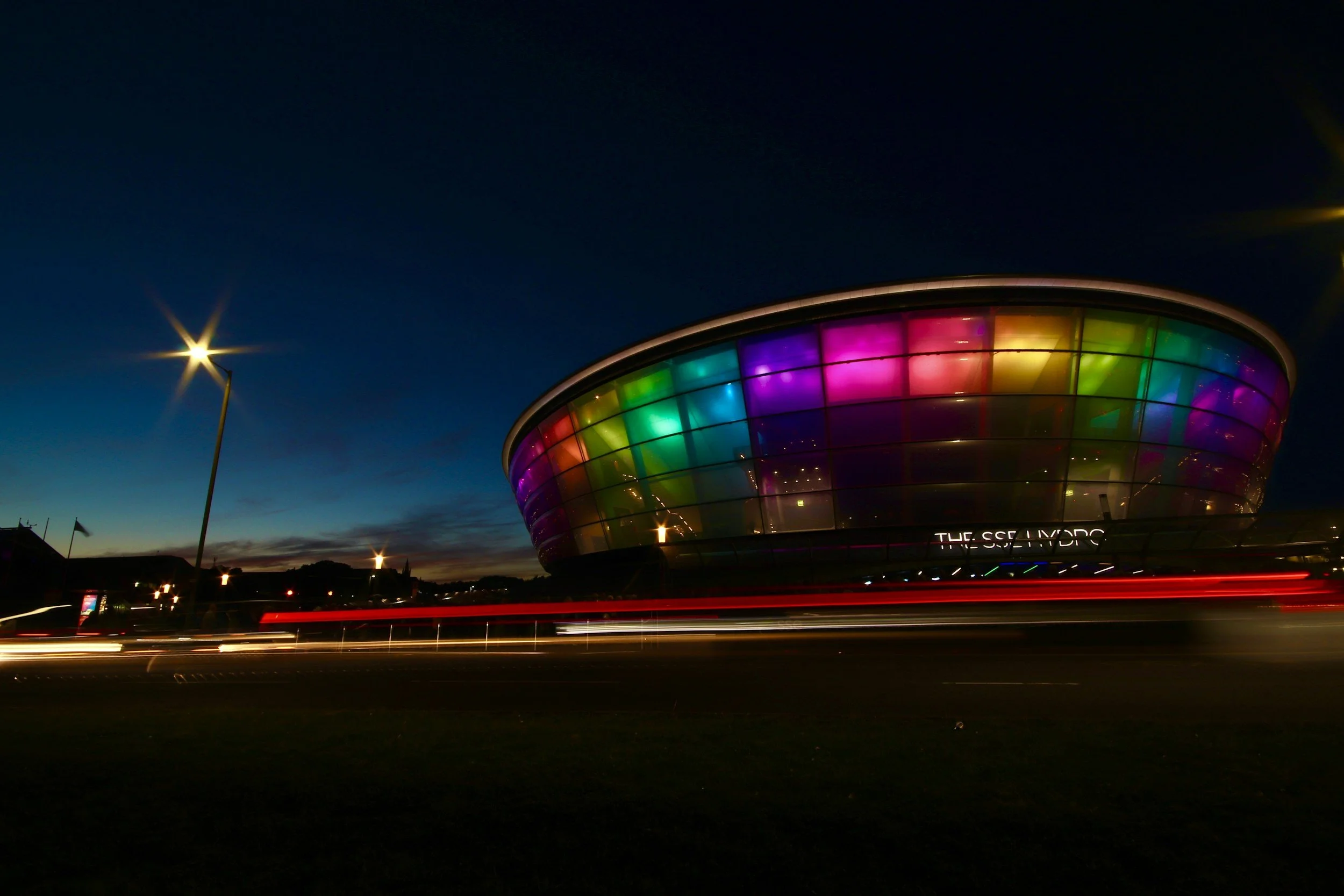
Since rehearsals began, it's become clear just how much organisation sits behind a production on this scale. From the audience, an opening ceremony lasts a couple of hours. Behind the scenes, it's the result of thousands of carefully planned decisions and an enormous amount of teamwork. One of the things I've found most interesting is the rehearsal process itself. We're not rehearsing in the Hydro, but in a leisure centre where the performance space has been marked out to the exact dimensions of the stage. At first it takes a bit of imagination, but after a while you almost stop noticing the sports hall around you. Tape on the floor becomes entrances, exits and staging, and you begin to understand how the creative team are building the show long before we ever rehearse in the arena. As the ceremony's artistic director recently described it, you really do have to let your imagination fill in the gaps during rehearsals.
The logistics are fascinating in their own right. Every performer has a numbered bib, which sounds simple but quickly becomes essential when you're working with hundreds of people. Those numbers determine where you stand, who you're rehearsing with and how the production team keeps track of such a large cast. Instead of trying to remember hundreds of names, everything runs through the numbering system, making what could be complete chaos feel remarkably organised.
Communication works in a similar way. Throughout rehearsals, members of the creative team are constantly talking to one another and to us performers through in-ear radio systems. Directions are being passed across different departments in real time, timings are adjusted, entrances are refined and problems are solved almost instantly. From the outside it probably looks seamless, but standing in the middle of it gives you an appreciation for just how many people are working together to make every rehearsal run smoothly.
It's also impossible not to notice the sense of community that's developing. The cast is made up of people from all sorts of different backgrounds, ages and levels of performing experience. Some have spent years working professionally, while others are taking part in something like this for the very first time. Despite that, there's a genuine feeling that everyone is working towards the same goal. Recent coverage of rehearsals has highlighted this sense of community, and I'd completely agree with that description. It's one of the things that's stood out most over the past few weeks.
What I've enjoyed most, though, is getting a glimpse behind the curtain. As someone who has spent years performing, I'm used to seeing the finished product. You learn your choreography, perform it and the audience sees a polished version of events. Being part of an opening ceremony has shown me a completely different side of live performance. There are stage managers, choreographers, creative directors, technical teams and volunteers all working simultaneously, each with a different role but all contributing to the same outcome.
It's made me appreciate just how much planning is required before anyone even walks on stage.
The ceremony itself is still a little while away, and there are plenty more rehearsals to come before we arrive at the Hydro. The details are gradually coming together, and while there are still moments where we're relying on imagination, it's becoming easier to picture how everything will look in the finished production.
For now, I'm simply enjoying being part of the process. Opportunities like this don't come around very often, and it's been fascinating to experience such a large-scale production from the inside rather than the audience. When the opening ceremony finally begins, most people will see a couple of hours of entertainment. I'll probably spend part of it thinking about the taped lines on a leisure centre floor, the numbered bibs, the voices coming through headsets and the countless rehearsals that made it all possible. I suspect that will make stepping onto the stage feel even more rewarding.
