
Watching the London Marathon from the sidelines
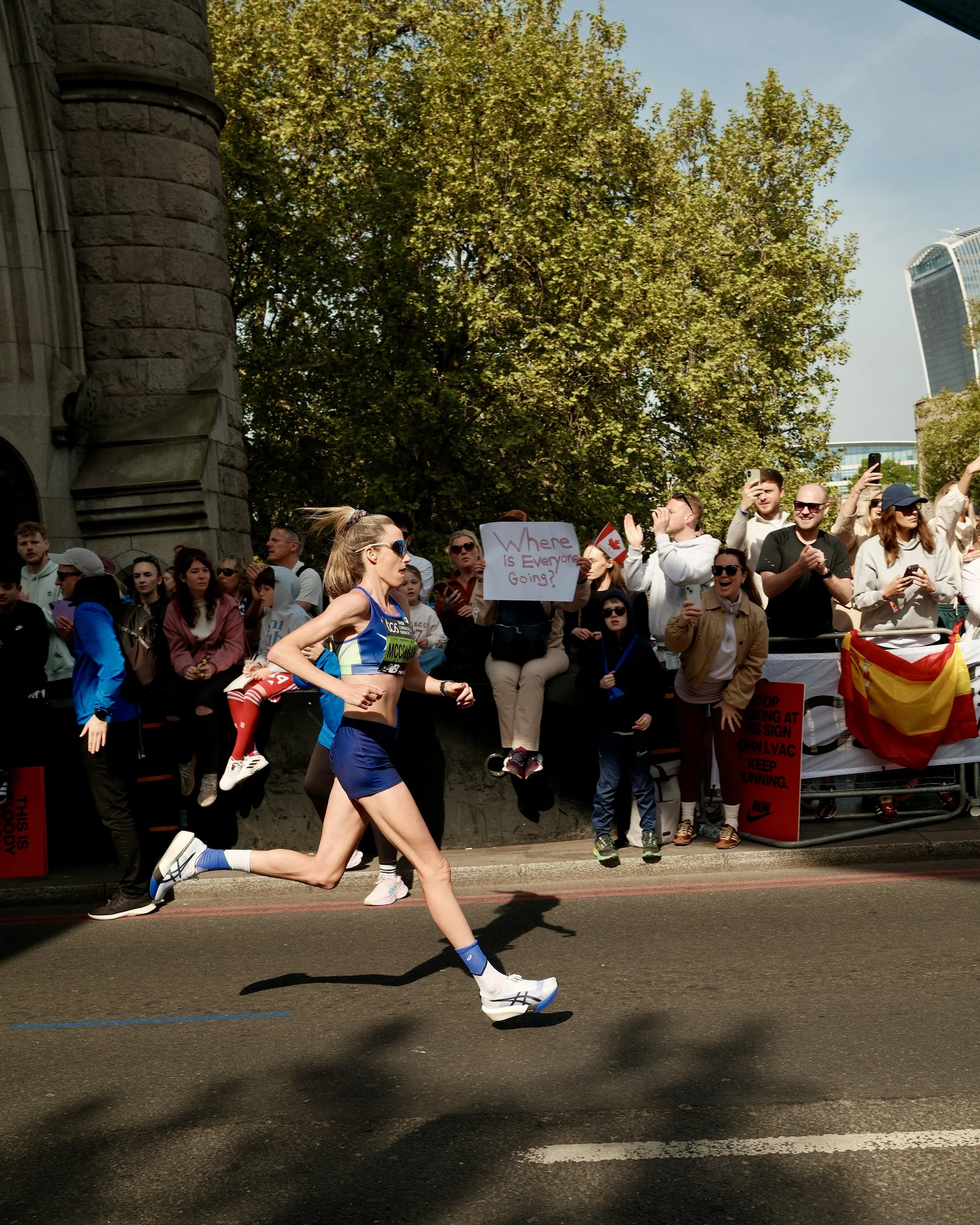
A couple of weeks after running the London Landmarks Half Marathon, I was back in London again, this time as a spectator for the London Marathon. It’s a very different experience watching a race rather than taking part in it, and it shifts your perspective in ways that aren’t immediately obvious.
I spent some time watching the elite runners early on, which was impressive in a very specific way. The pace, the control, and the efficiency of movement are immediately noticeable. It all looks very smooth, even at a speed that is clearly not sustainable for most people. There’s a sense of precision to it, which is interesting to watch, especially coming from a research background focused on performance.
But the rest of the day was shaped more by following a friend who was running her first marathon.
That changed the experience completely. Instead of watching the race as a single event, it became about tracking one person’s progress through it. Moving between different points on the course and seeing her at different stages gave a much clearer sense of the scale of what she was doing.
What stood out most was how steady and composed she looked throughout. From the early stages through to later parts of the course, there was a clear sense of focus and determination. Even as the race progressed, she maintained that same consistency, which is something that’s much easier to appreciate when you see someone multiple times along the route.
Watching that unfold made the demands of the marathon distance much more visible. It’s one thing to understand the distance in theory, but seeing someone move through it in real time gives a different perspective. It highlights not just the physical preparation involved, but the level of commitment required to sustain that effort over such a long period.
It also made the role of the crowd much more obvious. The support is constant, and it seems to have a noticeable effect, particularly when runners pass through busier sections of the course. You can see how much of a boost that provides, even if only briefly. It’s something you’re aware of when you’re running, but it’s easier to recognise its impact from the outside.
Following a friend through the race also made the whole experience feel more personal. It wasn’t just about observing the event as a whole, but about being part of someone else’s experience of it. By the time she reached the final stages, the focus was clearly on finishing, and seeing that through to the end was a genuinely rewarding part of the day.
Watching her cross the finish line put the scale of the achievement into perspective. Completing a marathon, particularly a first one, represents a significant amount of preparation and commitment, and seeing that moment from the outside made that very clear.
Overall, spectating the marathon provided a useful contrast to running. It made the structure of the race more visible, the variation in experiences more obvious, and the importance of support more apparent. It also reinforced how different the marathon is from shorter distances, both physically and mentally.
While it’s a very different experience to taking part, it offers a broader view of what’s involved. Seeing the race from both perspectives, running and spectating, makes the whole process feel more complete.
